





G2M Trusted Revenue Self Assessment
Stage 1: Foundational
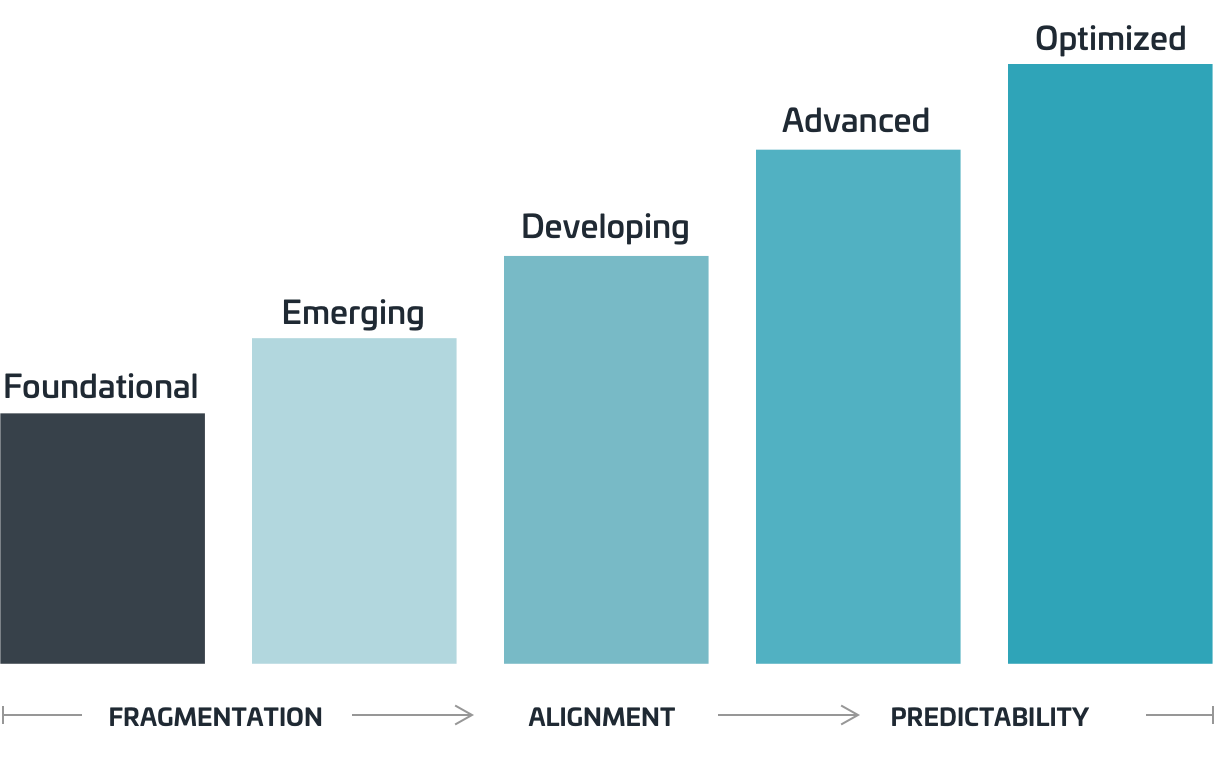
Based on your responses, your organization scored in the first tier of the Trusted Revenue Maturity Model, indicating that the core elements required to operate go-to-market resources as a trusted, aligned system are not yet in place. At this stage, revenue data is fragmented, definitions vary across functions, and performance explanations rely heavily on manual effort and interpretation. As a result, leaders struggle to explain revenue outcomes with confidence, forecasts remain unreliable, and alignment across Marketing, Sales, Customer Success, and Finance breaks down under pressure.
Where You Stand Today
Your responses indicate that your organization is in the Foundational stage of Trusted Revenue maturity. This means that go-to-market resources are not yet managed as a coherent system. Instead, it is the byproduct of disconnected GTM activities, siloed data, and competing interpretations of performance.
At this stage, leaders often struggle to answer basic but critical questions such as:
-
Why did pipeline, conversion, or expansion shift?
-
Which segments or channels actually drove the miss or beat?
-
What should we change now to influence the outcome?
Most explanations depend on exported spreadsheets, ad hoc analysis, or meetings where teams debate whose numbers are correct rather than acting from a shared, trusted revenue narrative.
What This Means for Your Organization
Trusted Revenue depends on alignment before optimization. In the Foundational stage:
-
Revenue data is fragmented across systems and teams
-
Definitions of pipeline stages, metrics, and segments conflict
-
Forecasts are driven by intuition rather than drivers
-
Performance investigations take days or weeks
-
Executive confidence in the numbers is low
Without a shared foundation and operating rhythm, even strong execution teams are forced to react instead of steer. Revenue outcomes feel volatile, and leadership time is spent reconciling the past instead of shaping the future.
Common Indicators at This Stage
Organizations operating at the Foundational stage of Trusted Revenue typically experience:
-
Fragmented Revenue Data: CRM, marketing, customer, and finance data live in different systems without a unified revenue model.
-
Conflicting Definitions: Marketing, Sales, CS, and Finance use different pipeline stages, metrics, and segmentation logic.
-
Slow, Manual Explanations: Diagnosing revenue shifts requires manual reconciliation across teams and tools.
-
Unreliable Forecasts: Forecast accuracy fluctuates, and last-minute surprises are common.
-
Decision Bottlenecks: Leadership meetings focus on debating numbers instead of deciding actions.
Your Priority: Establish Revenue Alignment
Before your organization can achieve predictable or optimized revenue, it must establish alignment across the revenue system.
This foundational work includes:
-
Aligning pipeline stages, metrics, and segmentation across teams
-
Unifying core GTM and revenue data sources
-
Establishing a shared revenue narrative leaders can trust
-
Reducing manual reconciliation and conflicting dashboards
This step is not about adding more tools. It’s about creating the conditions where revenue can be explained, trusted, and managed deliberately.
Recommended Next Step
If you’d like clarity on what to prioritize and how to move forward, we can guide you through a structured readiness review.
Schedule a Trusted Revenue Readiness Session
In this short working session, we’ll assess your current revenue operating model, identify the biggest alignment gaps, and outline a practical path toward explainable, predictable revenue.
Looking Ahead
Once a shared revenue foundation and narrative are in place, your organization will be ready to progress into the Emerging stage, where consistent definitions and unified data begin unlocking explainability, alignment, and early improvements in forecast reliability.