




G2M Trusted AI Self Assessment
Stage 1: Foundational
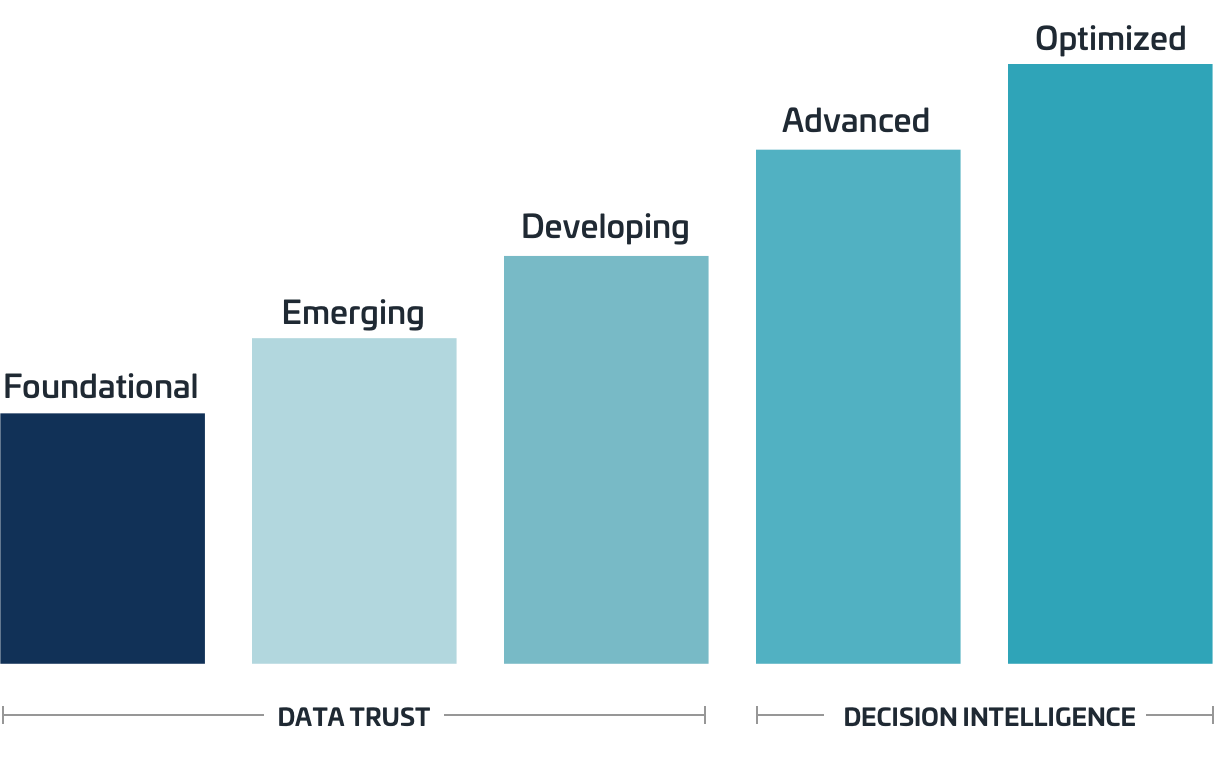
Based on your responses, your organization scored in the first tier of our Trusted AI Maturity Model, indicating that key elements of your data foundation, definitions, and AI grounding are not yet consistent enough to support reliable, decision-ready intelligence. At this stage, leaders often struggle with fragmented data, conflicting metrics, and analysis cycles that depend heavily on manual interpretation. These gaps make it difficult to diagnose performance confidently or scale AI beyond experimentation, ultimately limiting decision velocity and organizational alignment.
Where You Stand Today
Your responses indicate that your organization is in the Foundational stage of Trusted AI maturity. This means that the core elements required for trusted, explainable, and decision-ready AI are not yet in place. Data is fragmented, definitions vary across teams, and AI tools (if used) are not grounded in your actual business logic.
At this stage, leaders often struggle to get clear answers to simple questions like:
- What changed?
-
Why did it change?
-
What should we do next?
Most explanations rely on manual analysis, exported spreadsheets, or competing dashboards that tell different stories.
What This Means for Your Organization
Trusted AI depends on a stable, consistent data foundation and a unified narrative across teams. In the Foundational stage:
-
AI outputs are difficult to trust
-
Metrics conflict across systems
-
Performance investigations take days or weeks
-
Team alignment depends on meetings, not data
-
Key decisions rely heavily on individual interpretation
Before you can scale AI or automate decisions, you need to ensure your data is accurate, structured, accessible, and understood the same way across your organization. This is the work that unlocks every benefit of Trusted AI.
Common Indicators at This Stage
Teams operating at the Foundational stage typically experience:
- Fragmented Data. CRM, MAP, revenue, and product data live in different systems without a shared model.
- Conflicting Definitions. Sales, Marketing, Finance, and Ops use different metrics or naming conventions.
- Slow Explanations. Diagnosing performance shifts requires manual work and cross-functional reconciliation.
- Low AI Confidence. Existing AI tools generate inconsistent or generic insights, reducing trust.
- Decision Bottlenecks. Leadership meetings become debates over whose data is correct.
Your Priority: Build a Single Source of Truth
Before your organization can benefit from Trusted AI, you need to establish a consistent GTM data foundation. This includes:
- Aligning definitions across teams
-
Unifying key data sources
-
Resolving discrepancies and duplication
-
Establishing your semantic layer
-
Simplifying pathways to reliable insight
Once these elements are in place, AI becomes far more accurate, explainable, and actionable. This foundational step is not optional, it’s the prerequisite for every next stage of maturity.
Recommended Next Step
If you’d like clarity on what to prioritize and how to move forward, we can guide you through a structured readiness review.
Schedule a Trusted AI Readiness Session
In this short working session, we’ll assess your GTM data foundation, identify the most impactful improvements, and outline a practical path toward more consistent, trustworthy insights.
Looking Ahead
After strengthening your foundation, your organization will be ready to progress into the Emerging stage, where consistent definitions and reliable data begin unlocking explainability, alignment, and early AI value.