





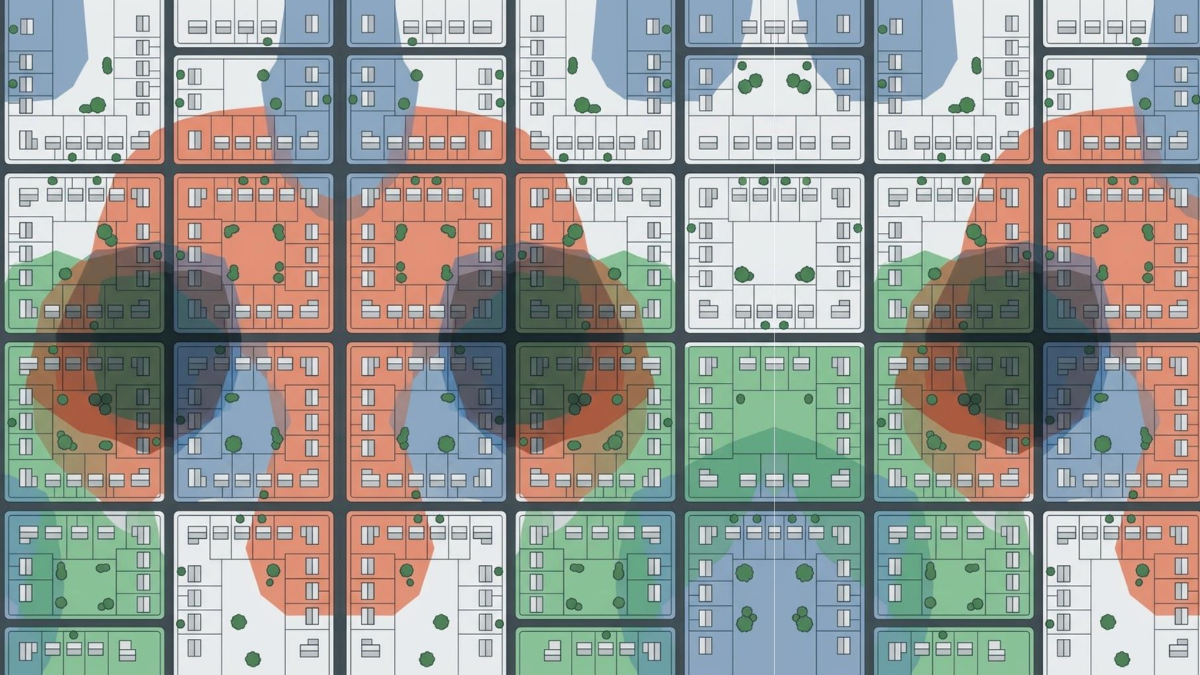
The data foundation required to grow subscribers, reduce CAC, and compete at the household level.
The telecom competition is now decided street corner by street corner and census block by census block. Fiber overbuilders are deploying at scale, MSOs that started on coax are now in the fiber game, and fixed wireless is taking real ground in market after market.
If your gross and net adds feel harder to defend than they did even a few years ago, you’re reading the market correctly. The competition didn’t just grow. It got local.
The competition went local, but most playbooks didn’t
The operators taking share compete in a super-targeted way for every market and every neighborhood. The ones losing share are still running a centralized approach with a light layer of segmentation, betting that broad personalization is enough to win at a granular level.
It isn’t. You can’t win an inch thick where the fight is a mile deep. When a fiber builder and a fixed wireless provider are both contesting the same block with different offers, a national playbook averages its way into the middle and loses on both ends. One regional fiber operator we worked with reversed exactly that pattern, growing revenue 2-3x over two years by fighting at the block level instead of the market level.
Building the network was the easy part
Most operators have learned that the network is the manageable part. You run your crews, you put fiber in the ground or a tower in the air, and the plant gets built. Then the investment side asks for penetration and ROI, and the real problem starts.
Markets turn out to be more saturated and more price-sensitive than the plan assumed. There’s no clear view of where the right prospects are or who to chase first. And the answers sit trapped across decades of legacy and acquired systems that were never fully connected, so every team argues from a different number. You find out you lost share three, four, or five months after it happened. Reactive operators are always reading the rear-view mirror.
What the top performers do differently
The winners do one thing the laggards don’t: they build a data foundation that lets them compete household by household instead of market-wide.
It starts from a realization. Every marketing and sales touch, online and offline, can be captured and connected. So they instrument the whole buyer journey, from first awareness to renewal, and always know which mix of touches is working and which isn’t.
That takes more than another dashboard, which is why “we already have a BI tool” misses the point. The work is connecting the data, not displaying it. Bring the sources into one place, tie it to billing so the operational and financial numbers finally agree, and you can answer the only question that matters when a number moves: why. Acquisition or retention? Voluntary or involuntary churn? One segment, one market, or one product?
Then the work gets local. Picture a single block: a family with two teenagers who’ll pay for speed, next door to a retiree on a fixed income who won’t. A national offer treats them the same and misprices both doors. An operator who has scored each household sends two different offers and wins both. That’s the gap between a 30-50% cut in CAC and a marketing budget poured into the wrong mailboxes, and between gaining 5-10 points of penetration and watching a competitor take the block.
Household-level execution was always the goal. Cloud and AI are what finally make it fast, scalable, and affordable. And here’s the part that matters to anyone who’s bought a strategy deck before: you get built capability, not a recommendation. The foundation lives in your stack and your teams use it every day, long after the engagement ends.
The growth and spend questions a connected data foundation finally answers
Once that foundation is in place, the day-to-day changes. The questions a board or sponsor actually asks stop triggering a fire drill and start having answers:
- Where are we winning, and where aren’t we?
- If we spend the next dollar of sales or marketing, which channel, market, incentive, or product returns the most?
And you answer them at the neighborhood and household level, in minutes instead of weeks. That’s what decision intelligence delivers: data connected straight to the decision it informs. And when a board or sponsor challenges a number, you can show the reasoning behind it, not just the output. That’s the role of Trusted AI: answers that are defensible and auditable, not a black box.
The pattern shows up in the results. The fiber operator above hit its ROI and penetration benchmarks and took share from local competitors. A smaller operator running on a $200M raise doubled revenue by scoring every household and matching the right sales and marketing mix to each one. These are engagement outcomes, not guarantees. What’s consistent is the cause: the operators who can see the block-level fight are the ones who win it.
Start where you are: build the foundation one source at a time
None of this requires a moonshot. The foundation gets built one source at a time. Start with the data you already trust, even a single system, and be deliberate about how you bring it in and what you build on top of it. The first connected source pays for itself, and the next one costs less.
The fight is local now, a mile deep on every block, and the operators winning it built the foundation to fight there before their competitors did. The only question left is which side of that line you’re on. Take the five-stage maturity self-assessment, find your stage, and you’ll know the next move to make.
